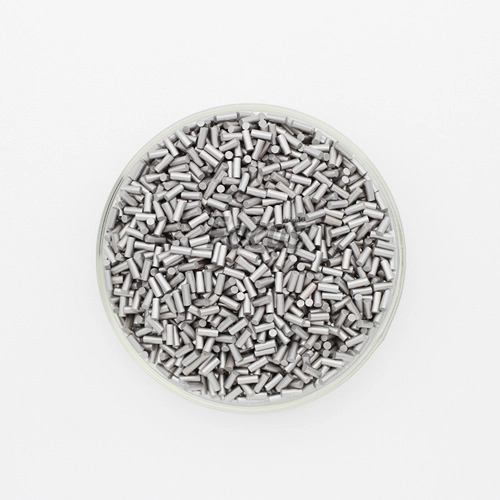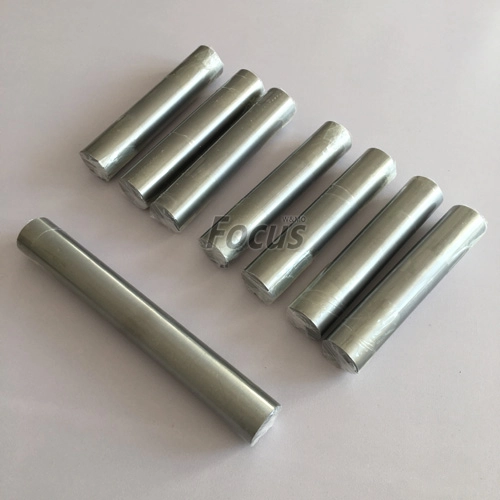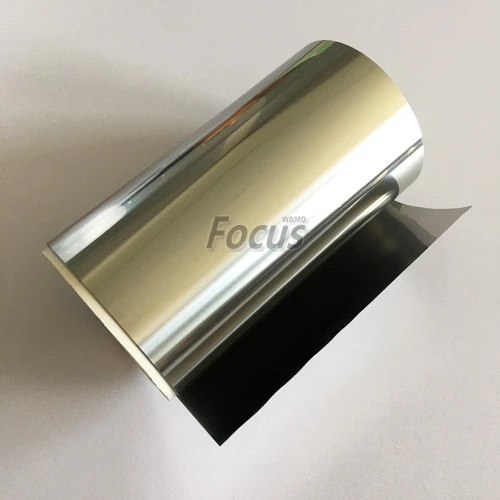
Purity: 99.9%, 99.95% (RO5400 / ASTM B392 standards)
Density: 8.57 g/cm³
Thickness: Foil (0.01–0.1 mm), Sheet (0.1–4 mm), Plate (4–30 mm)
Width: Up to 600 mm
Length: Customizable
Grades: Pure Nb, Nb-1Zr
Looking for premium niobium foil, niobium sheet, and niobium plate for high-performance industrial applications? Focuswmo specializes in producing high-purity niobium materials with exceptional consistency, outstanding mechanical strength, and excellent corrosion resistance—ideal for aerospace, electronics, chemical engineering, and superconducting industries.
Niobium (Nb) is a refractory transition metal known for its high melting point, excellent corrosion resistance, and unique superconducting properties. It is widely processed into flat-rolled products like foil, sheet, and plate for aerospace, medical, energy, and electronics applications.
1. General Product Information
What is the difference between Niobium foil, sheet, and plate?
The primary difference lies in the thickness of the material, which also dictates how it is packaged and used:
l Niobium Foil: Typically classified as thicknesses below 0.1 mm (0.004 inches). It is highly flexible and often supplied in rolls or ribbons.
l Niobium Sheet: Ranges from 0.1 mm to about 4.75 mm (0.187 inches) thick. Sheets are flat pieces used for fabrication, stamping, and deep drawing.
l Niobium Plate: Anything thicker than 4.75 mm (0.187 inches). Plates are heavy, rigid pieces used for structural components or sputtering targets.
What are the standard purity levels available?
Niobium flat products are generally available in two primary grades:
l Commercial Grade (Reactor Grade / Type R04200/R04210): Typically ≥ 99.9% or ≥ 99.95% pure. Used for chemical processing, corrosion resistance, and general alloying.
l Superconducting Grade (RRR Grade): High-purity niobium with a high Residual Resistivity Ratio (usually RRR ≥ 250 or ≥ 300). This grade is crucial for superconducting radiofrequency (SRF) cavities in particle accelerators.
2. Key Properties & Specifications
What are the mechanical and physical properties of Niobium?
Niobium is highly ductile at room temperature but retains its strength at elevated temperatures.
|
Property |
Value |
|
Melting Point |
2477°C (4491°F) |
|
Density |
8.57 g/cm³ |
|
Tensile Strength (Annealed) |
~200–300 MPa |
|
Elongation (Annealed) |
~25%–35% |
|
Superconducting Critical Temp (Tc) |
9.25 K |
Is Niobium corrosion resistant?
Yes. At room temperature, niobium forms a dense, protective passive oxide layer (Nb2O5). It exhibits outstanding resistance to most organic and mineral acids (like hydrochloric and sulfuric acids), even at elevated temperatures.
|
Warning: Niobium is readily attacked by hydrofluoric acid (HF) and hot, concentrated alkaline solutions. |
3. Applications & Uses
What are Niobium foils used for?
Because of its thinness and flexibility, niobium foil is commonly used in:
l Substrates for thin-film deposition.
l Components in electron tubes and lighting (e.g., sodium vapor lamps).
l Anodized decorative layers or jewelry components.
l Superconducting shielding ribbons.
What are Niobium sheets and plates used for?
l Aerospace: Rocket engine nozzles and thrust chambers (often alloyed as C-103).
l Superconductivity: Fabricating SRF cavities for particle accelerators (like CERN or Fermilab).
l Chemical Processing: Heat exchangers, vessel linings, and agitators handling corrosive fluids.
l Medical Devices: Biocompatible implants and pacemakers, as niobium does not react with human tissue.
l Electronics: Sputtering targets for manufacturing thin-film coatings and capacitors.
4. Fabrication, Welding, and Handling
How do you cut or machine Niobium sheets?
Niobium behaves similarly to soft copper or austenitic stainless steel during machining—it is highly ductile and prone to "gumming" or work-hardening.
l Shearing/Blanking: Suitable for foils and thin sheets.
l Machining: Requires sharp tools (carbide is preferred), high cutting speeds, and heavy lubrication (such as water-soluble oil) to prevent galling.
Can Niobium be welded?
Yes, but it is highly reactive with oxygen, nitrogen, and hydrogen at temperatures above 300°C. Exposure to these gases causes severe embrittlement.
l Approved Methods: Electron Beam Welding (EBW) in a vacuum is ideal. Gas Tungsten Arc Welding (GTAW/TIG) can be used if an ultra-pure argon shield completely blankets the weld zone (front and back).
Why does Niobium change color, and can I do it to sheets/foils?
Niobium can be anodized or thermally treated to create a wide spectrum of vibrant colors (blue, purple, yellow, green). This is not caused by dyes, but by optical interference through a transparent niobium oxide layer. Changing the voltage changes the thickness of the oxide, altering the color.
Over 8 years of expertise in refractory metal R&D and manufacturing
Advanced precision rolling and vacuum annealing equipment
Strict quality control following ASTM & ISO standards
Fast delivery & customized production tailored to your project needs
Global supply capability with stable long-term material consistency
Whether you need ultra-thin niobium foil, precision niobium sheet, or high-strength niobium plate, Focuswmo provides reliable materials you can trust. Contact us for quotes, technical support, and customized processing.

+86 18625974739
focuswmo@outlook.com
High Tech Industrial Zone, Xiyuan International, Jianxi District, Luoyang City, Henan Province
 WeChat
Get a quote