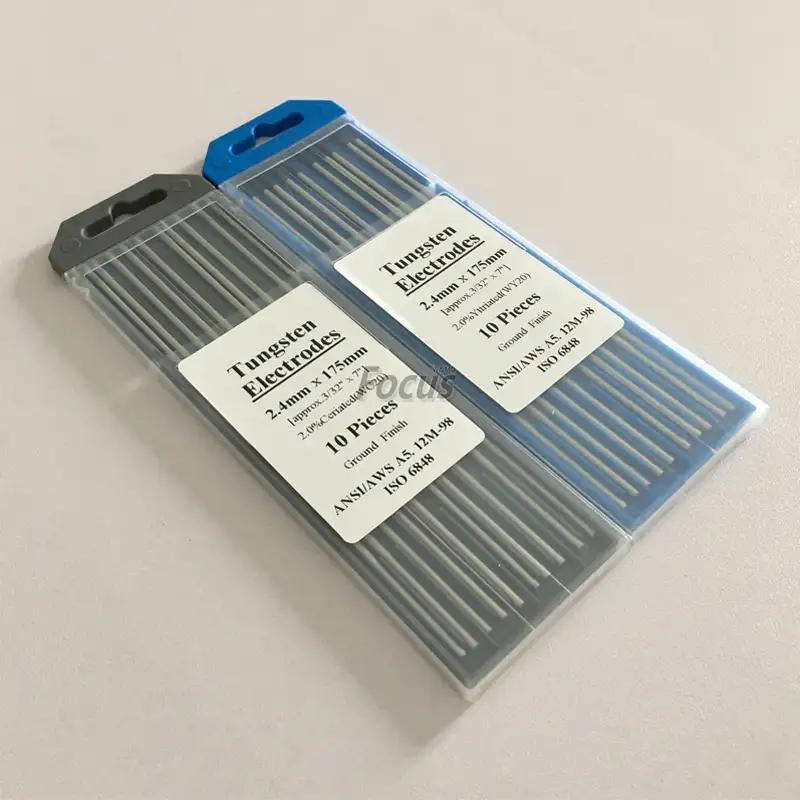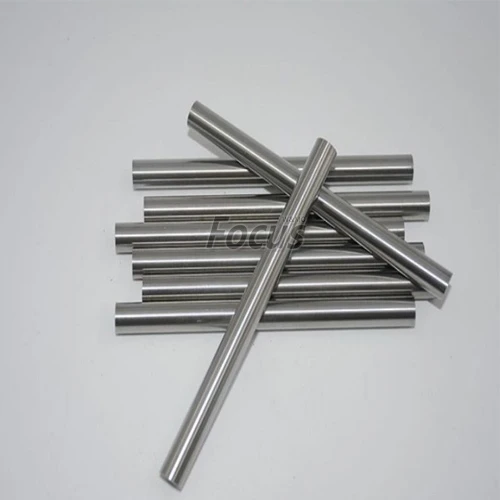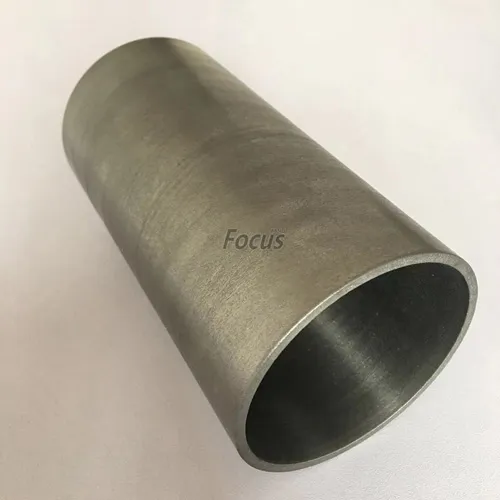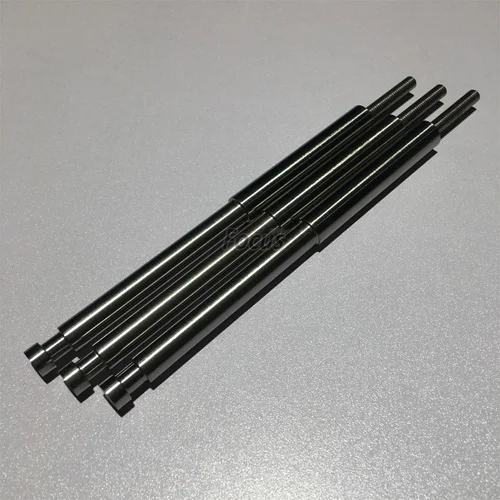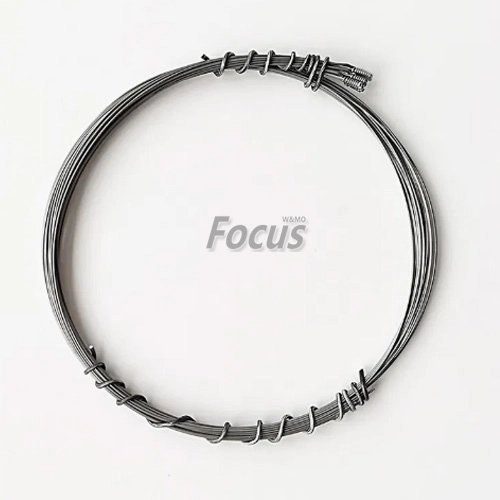
Available Types: WRe3%, WRe5%, WRe25%, WRe26%
Available Forms:
Rods/Bars
Wires
Sheets/Plates/Foils
Machined Components
Focuswmo provides premium-grade WRe Alloy (Tungsten-Rhenium Alloy) engineered for extreme temperatures, excellent ductility, and superior mechanical strength. As a trusted manufacturer of tungsten and molybdenum materials, Focuswmo delivers stable quality, customizable dimensions, and reliable global supply for high-tech industries.
|
A Tungsten-Rhenium (W-Re) alloy is a premier refractory metal blend. Pure tungsten is famous for having the highest melting point of all metals, but it is notoriously brittle and difficult to work with post-heating. By adding rhenium, engineers unlock what material scientists call the 'Rhenium Effect.' This drastically improves the metal's flexibility, makes it stronger at extreme temperatures, and prevents it from turning brittle after recrystallization. |
What are the most common W-Re alloy compositions?
• W-3Re (3% Rhenium): Primarily used for structural parts, heating elements, and wire. It offers a great balance of high strength and improved durability without requiring massive amounts of expensive rhenium.
• W-25Re or W-26Re (25–26% Rhenium): Primarily used in high-temperature measurement (thermocouples) and aerospace. This composition maxes out the ductility (flexibility) gains from the rhenium effect.
What exactly is the "Rhenium Effect"?
Pure tungsten becomes very brittle once it is heated past its recrystallization temperature. Adding rhenium pulls off three major upgrades:
1. Lower DBTT: It lowers the Ductile-to-Brittle Transition Temperature (DBTT), meaning the metal can take physical impacts at much lower temperatures without cracking.
2. Creep Resistance: It increases the overall tensile strength and creep resistance (resistance to slowly deforming under constant heat and stress).
3. High-Temperature Ductility: It preserves flexibility even after the alloy has spent hours glowing red-hot.
What is the melting point of a W-Re alloy?
Depending on the exact blend, it melts between 3050°C and 3400°C (5522°F to 6152°F). This allows components to operate reliably in environments exceeding 2000°C.
2. Common Industrial Applications
Where is W-Re alloy most frequently used?
|
Industry |
Primary Use Case |
Why It's Chosen |
|
Temperature Sensing |
Type C, D, and G Thermocouple wires |
Can accurately measure temperatures up to 2500°C without drifting or shattering. |
|
Aerospace & Defense |
Rocket engine nozzles, heat shields, hypersonic leading edges |
Withstands high thermal shock and aggressive physical forces at extreme temperatures. |
|
Semiconductors |
MOCVD heating elements and wafer annealing supports |
Drastically outlasts pure tungsten under rapid heat-and-cool cycles, reducing equipment downtime. |
|
Medical Technology |
X-ray tubes, anodes, and neurovascular micro-stents |
High radiopacity (shows up clearly on scans), excellent bio-compatibility, and durability. |
3. Manufacturing & Processing
How are W-Re alloys made?
Because both metals have such incredibly high melting points, traditional liquid casting is rarely practical. Instead, they are manufactured using Powder Metallurgy:
1. Blending: High-purity tungsten and rhenium powders are precisely mixed.
2. Compaction: The mixture is hydraulically pressed or Cold Isostatically Pressed (CIP) into a solid shape called a 'green compact.'
3. Sintering: The compact is heated in a vacuum or hydrogen atmosphere to bind the particles together into a high-density mass.
4. HIP (Optional): Hot Isostatic Pressing uses simultaneous high temperature and gas pressure to squeeze out any remaining microscopic pockets of air, pushing the density to over 99.5%.
Can you machine or weld W-Re alloys?
Yes, but it isn't like working with aluminum or steel. Because of its intense hardness and high work-hardening rate, standard cutting tools wear out quickly.
• Machining: Specialized techniques like Electrical Discharge Machining (EDM) or diamond-tipped tools are highly recommended.
• Welding: It can be successfully welded using Electron Beam Welding (EBW) or laser welding, ideally in an inert gas shield (like Argon) to prevent contamination. Unlike pure tungsten, a W-Re weld retains decent ductility.
4. Environment & Handling
Does W-Re alloy rust or oxidize?
In a vacuum or an inert atmosphere (like Nitrogen or Argon), W-Re alloys are incredibly stable and chemically inert. However, they will oxidize aggressively in open air at high temperatures. Once temperatures cross 500°C to 600°C in an oxygen-rich environment, the metals begin to form volatile oxides. For open-air use at extreme heat, protective anti-oxidation coatings are mandatory.
Why is W-Re alloy so expensive?
Tungsten is reasonably priced, but Rhenium is one of the rarest elements in the Earth's crust. It cannot be mined directly; it is only recovered as a secondary byproduct during copper and molybdenum refining. Because global supply is limited to a few dozen tons per year, any alloy with a high rhenium percentage carries a premium price tag.
Direct Manufacturer of tungsten, molybdenum, and W-Re alloy materials
Strict Quality Control ensuring consistent density, purity, and grain structure
Fast Delivery from our advanced production facility
Global Export Capability supported by professional technical service

+86 18625974739
focuswmo@outlook.com
High Tech Industrial Zone, Xiyuan International, Jianxi District, Luoyang City, Henan Province
 WeChat
Get a quote