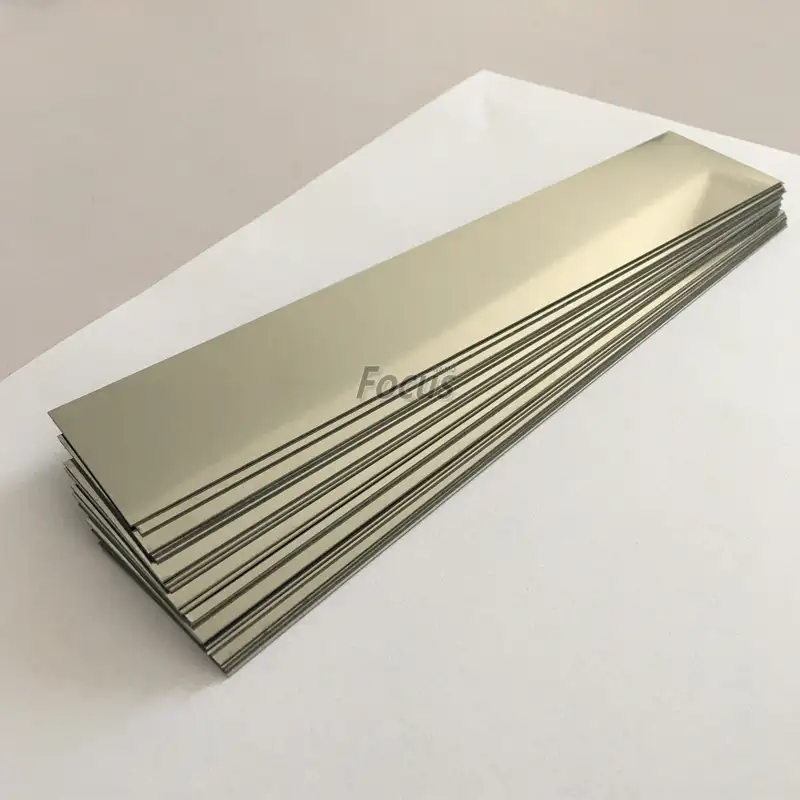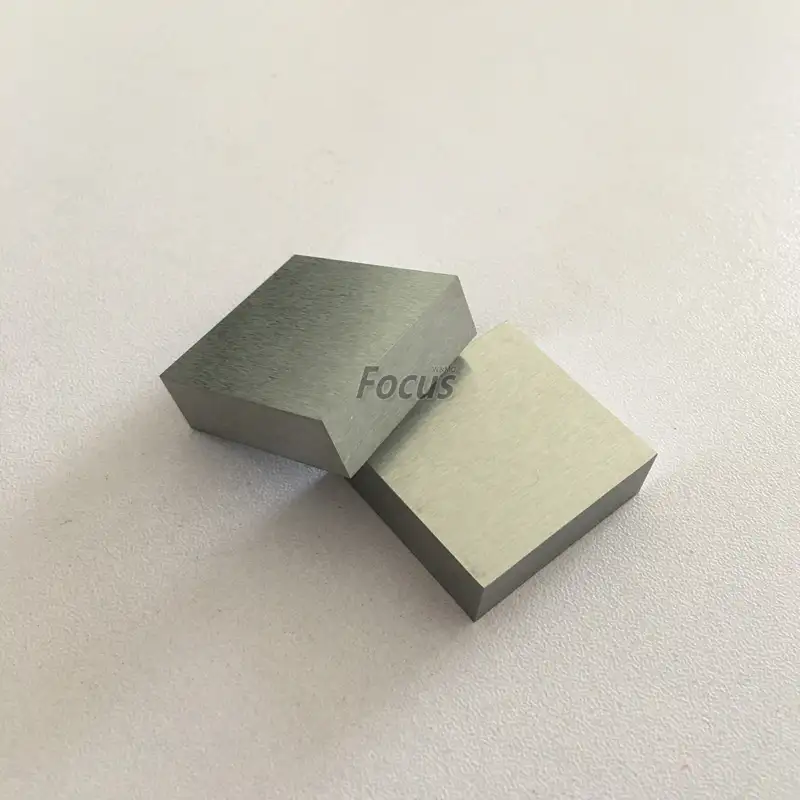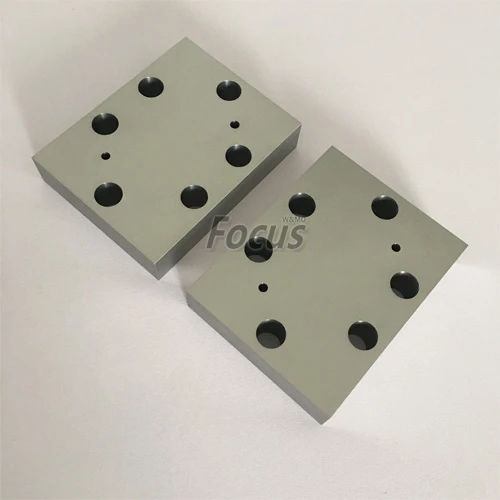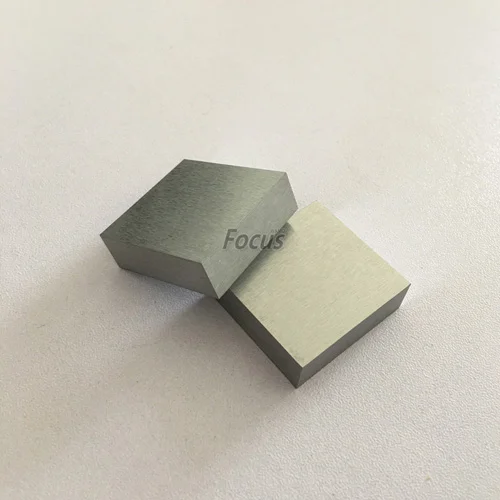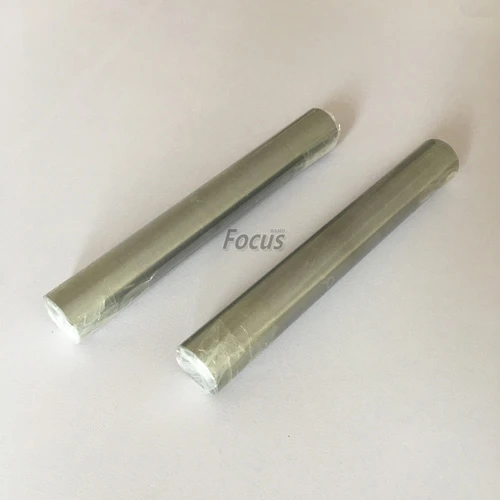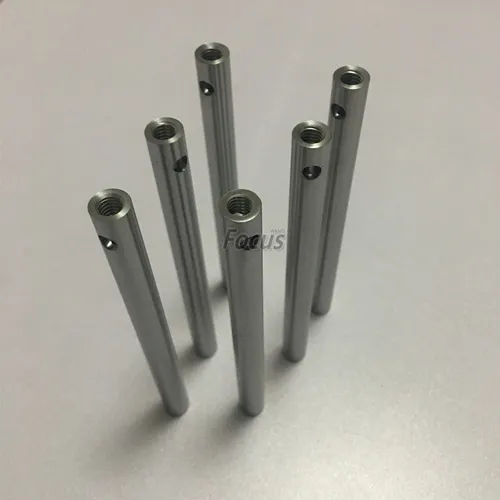
Available Types: 0.3 wt%, 0.6wt%, 1.1wt%, other customizable
Available Forms:
Rods & Bars
Wires
Sheets & Plates &Foils
Tubes & crucibles
Fabricated and machined parts
Customized shapes as per drawing
Focuswmo supplies premium-grade MoLa Alloy (Molybdenum-Lanthanum Alloy) designed for high-temperature, high-strength, and long-life applications. With excellent creep resistance, outstanding ductility, and superior dimensional stability, MoLa Alloy is widely used in vacuum furnaces, aerospace components, lighting, and high-temperature tooling.
|
A MoLa alloy (Molybdenum-Lanthanum oxide alloy), commonly referred to as lanthanated molybdenum or high-temperature molybdenum, belongs to a class of materials known as Oxide Dispersion Strengthened (ODS) alloys. While pure molybdenum is a highly capable refractory metal, it struggles with structural sagging (creep) and severe embrittlement once heated past its recrystallization point. By embedding microscopic particles of lanthanum trioxide (La2O3), material scientists create a unique, 'stacked fiber' grain microstructure that completely revolutionizes high-heat performance. |
1. Composition & Core Microstructure
What exactly is a MoLa alloy?
• 0.3 wt % Lanthana: Commonly used as an economical, direct substitute for pure molybdenum to provide basic resistance to high-temperature deformation.
• 0.6 wt % Lanthana: Widely accepted as the 'best value' formulation for the thermal processing industry, delivering an optimized balance of ductility and mechanical strength.
• 1.1 wt % Lanthana: The highest standard doping level, engineered for severe structural demands requiring extreme creep resistance.
What is the "Stacked Fiber" microstructure?
When MoLa alloy sheets or rods are rolled and processed, the embedded lanthana particles line up linearly. These micro-particles act as physical pinboards that block grain boundaries from shifting or growing outward when heated. This forms an elongated, interlocking stacked fiber grain structure that remains intact up to 2000°C (3632°F).
How does MoLa's melting point compare to pure molybdenum?
The melting point of MoLa alloy matches pure molybdenum at 2620°C (4748°F). However, the critical difference lies in its usable threshold: MoLa maintains its shape and structural integrity at working temperatures where pure molybdenum would completely sag or snap.
2. Key Advantages & Performance Upgrades
What makes MoLa superior to pure molybdenum?
• Elevated Recrystallization Temperature: Pure molybdenum recrystallizes around 1100°C to 1200°C. MoLa effectively delays this threshold, pushing its recrystallization temperature well past 1300°C to 1500°C.
• Exceptional Creep Resistance: Thanks to its ODS grain pinning, a 1.1% MoLa configuration displays a creep rate at 1800°C that is two orders of magnitude lower than pure molybdenum tested at a much milder 1200°C.
• Post-Heat Ductility: When pure molybdenum cools down after exceeding its recrystallization point, it becomes dangerously brittle (yielding less than 1% elongation). Recrystallized MoLa retains excellent room-temperature ductility and flexibility (often greater than 25% elongation), preventing handling fractures.
• Directional Isotropy: Thin sheets of MoLa possess remarkable malleability, meaning they can be bent or stamped identically across both longitudinal and transverse directions without tearing.
3. Common Applications
Where is MoLa alloy most frequently utilized?
|
Industry |
Primary Use Case |
Why It's Chosen |
|
High-Vacuum Furnaces |
Heating elements, structural support grids, charge carriers, and folded boats/trays. |
Resists sagging and dimensions warping under cyclical, extreme heat stress up to 1900°C. |
|
Lighting & Electronics |
Filament retaining pins, feed wires, and vacuum tube electrodes. |
Excellent thermal and electrical conductivity paired with post-weld room temperature ductility. |
|
Glass Manufacturing |
Stirring tools, electrodes, and processing components. |
Highly resistant to wear, thermal shock, and degradation when immersed in molten glass. |
|
Aerospace & Defense |
Rocket engine elements, missile steering shields, and high-temp instrumentation. |
Maintains its tensile strength and stiffness at extreme mechanical loads. |
4. Operational Limitations & Best Practices
Can MoLa alloy be used in an open-air environment?
No, not at extreme temperatures. Like pure molybdenum, MoLa reacts aggressively with oxygen. When operated in open air above 400°C (752°F), the metal begins to oxidize rapidly and will sublimate (evaporate away into a volatile smoke). It must always be operated under a protective vacuum, inert gas (Argon/Nitrogen), or a hydrogen-reducing atmosphere.
What is the maximum recommended operating temperature?
The practical ceiling for MoLa alloy is 1900°C (3452°F). If push comes to shove and you exceed 1900°C, the microscopic lanthanum trioxide particles will break free and vaporize out of the surface of the metal, destroying its ODS properties and leaving behind vulnerable, standard molybdenum grain structures.
MoLa vs. TZM Alloy: Which is better?
• Choose TZM (Titanium-Zirconium-Molybdenum): If your environment operates between 700°C and 1400°C and requires high mechanical strength under intense physical loads.
• Choose MoLa: If your application operates consistently above 1400°C. Above this temperature line, MoLa outpaces TZM's structural strength, maintains far better creep resistance, and remains considerably more ductile after long-duration heat exposure.
As a trusted global supplier of tungsten and molybdenum materials, Focuswmo offers:
Stable and consistent material quality
Advanced production technology and precision machining
Fast delivery and OEM customization
Competitive pricing and professional technical support

+86 18625974739
focuswmo@outlook.com
High Tech Industrial Zone, Xiyuan International, Jianxi District, Luoyang City, Henan Province
 WeChat
Get a quote