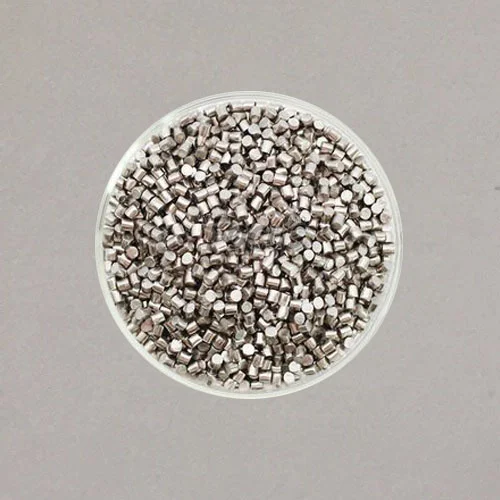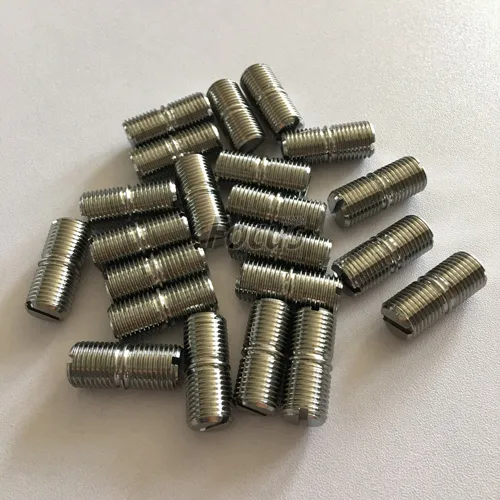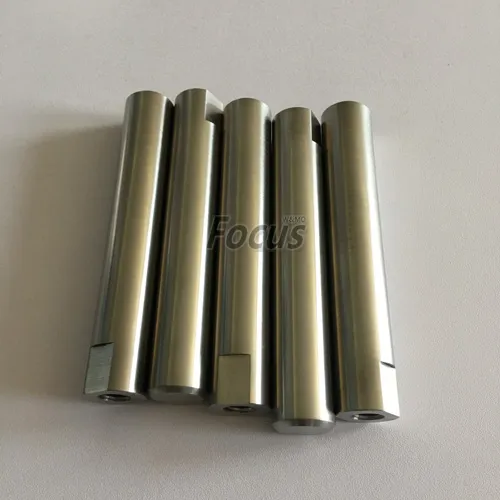
Titinium Alloy: Ti6Al4V(Ti Gr5)
Density: 4.43 g/cm³
Available forms:
Rods & Bars
Foils, Sheet & Plates
Wire
Tube & Pipe
Disc, Ring, Fastener and Machined Parts
Focuswmo supplies premium-grade Ti-6Al-4V (Grade 5) titanium alloy, engineered for demanding applications that require exceptional strength-to-weight ratio, corrosion resistance, and reliability. As one of the most widely used titanium alloys globally, Ti-6Al-4V delivers outstanding mechanical and thermal performance across aerospace, medical, industrial, and high-tech manufacturing sectors.
1. General & Composition
Q: What is Ti6Al4V?
Ti6Al4V (also known as Ti-6-4, Grade 5, or Ti64) is an alpha-beta titanium alloy. It is the most widely used titanium alloy in the world, accounting for roughly 50% of total titanium usage globally.
Q: What does "Ti6Al4V" stand for?
The name directly reflects its chemical composition. It is a titanium base alloyed with:
• 6% Aluminum (Al): Stabilizes the alpha phase and increases strength while reducing weight.
• 4% Vanadium (V): Stabilizes the beta phase, allowing the alloy to be heat-treated.
Q: What is the difference between Grade 5 and Grade 23 (ELI)?
Grade 5 is standard Ti6Al4V, optimized for high strength and structural efficiency. Grade 23 (Ti6Al4V ELI) stands for 'Extra Low Interstitials'. It contains lower limits on carbon, hydrogen, iron, and oxygen. This tweak reduces strength slightly but significantly improves ductility, fracture toughness, and biocompatibility, making it the premier choice for medical implants.
2. Properties & Performance
Q: What are the key mechanical properties of Ti6Al4V?
Ti6Al4V is famous for its exceptional strength-to-weight ratio (specific strength). The typical annealed property values are summarized in the table below:
|
Property |
Typical Value (Annealed) |
|
Density |
4.43 g/cm³ (Approx. 60% the weight of steel) |
|
Tensile Strength (Ultimate) |
≥ 950 MPa (138,000 psi) |
|
Yield Strength |
≥ 880 MPa (128,000 psi) |
|
Modulus of Elasticity |
114 GPa (Close to human bone) |
|
Melting Point |
Approx. 1660°C (3020°F) |
Q: Is Ti6Al4V corrosion-resistant?
Yes, exceptionally so. Upon exposure to oxygen, Ti6Al4V instantly forms a continuous, stable, and highly protective oxide film (TiO2). This makes it virtually immune to corrosion from saltwater, marine environments, and a wide variety of industrial chemicals and acids.
Q: What is its maximum operating temperature?
Ti6Al4V performs reliably at temperatures up to 400°C (750°F). Beyond this range, its strength begins to drop, and it becomes susceptible to rapid oxidation.
3. Manufacturing & Processing
Q: Can Ti6Al4V be heat-treated?
Yes. Because it contains both alpha and vanadium-stabilized beta phases, it can be heat-treated to modify its microstructure.
• Annealing: Done at 700°C - 850°C to maximize ductility and fracture toughness.
• Solution Treating and Aging (STA): Involves heating, quenching, and aging to significantly boost tensile and yield strength.
Q: Is it easy to machine?
Generally, no. Ti6Al4V is notoriously difficult to machine compared to steel or aluminum. It has low thermal conductivity, meaning heat builds up rapidly at the cutting tool edge rather than dissipating through the chip. It also work-hardens quickly. Machining requires rigid setups, high-quality carbide tools, sharp cutting edges, and heavy use of coolant.
Q: Can Ti6Al4V be used in 3D printing (Additive Manufacturing)?
Absolutely. It is one of the premier metals used in Direct Metal Laser Sintering (DMLS) and Electron Beam Melting (EBM). 3D-printed Ti6Al4V is heavily utilized in aerospace for complex, lightweight brackets and in the medical field for porous, bone-mimicking orthopedic implants.
4. Applications
Q: Where is Ti6Al4V most commonly used?
• Aerospace: Jet engine components (compressor blades, discs), structural airframe parts, fasteners, and rocket motor cases.
• Medical & Dental: Joint replacements (hips, knees), bone screws, cranial plates, and dental implants (primarily using the ELI Grade 23 variant).
• Marine & Chemical Processing: Offshore oil and gas equipment, underwater valves, and chemical storage tanks.
• High-End Consumer Goods: Premium sports equipment (golf clubs, bicycle frames) and high-end electronics.
5. Limitations & Disadvantages
Q: What are the main drawbacks of Ti6Al4V?
• Cost: It is expensive to extract, refine, and process compared to steel and aluminum.
• Galling: It has a high tendency to cold-weld or gall when rubbing against itself or other metals, which can cause severe wear unless proper coatings or lubricants are applied.
• High-Temperature Limit: It cannot handle the extreme temperatures (>500°C) that nickel-based superalloys can manage in turbine hot-sections.
Reliable manufacturing with strict quality control
Competitive pricing for bulk and custom orders
Fast global delivery
Professional technical support for complex requirements

+86 18625974739
focuswmo@outlook.com
High Tech Industrial Zone, Xiyuan International, Jianxi District, Luoyang City, Henan Province
 WeChat
Get a quote