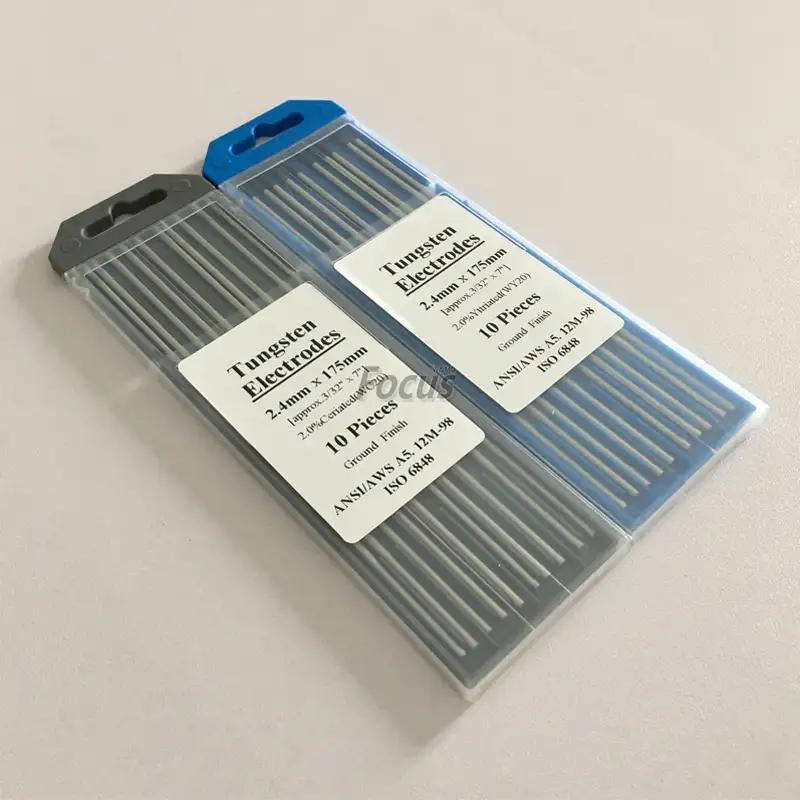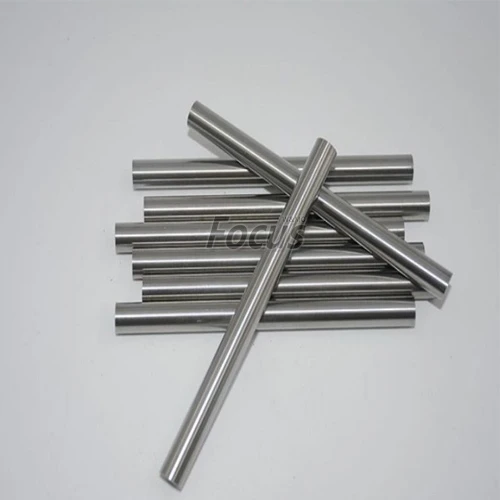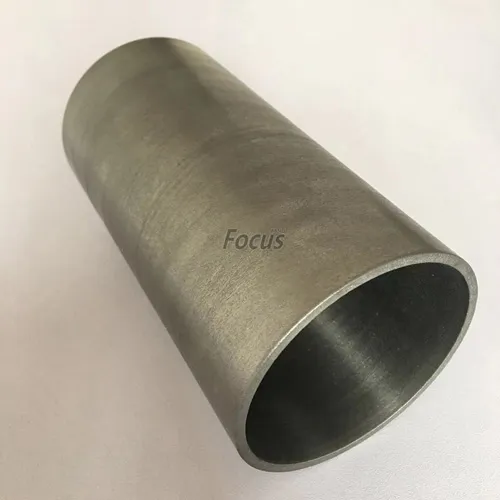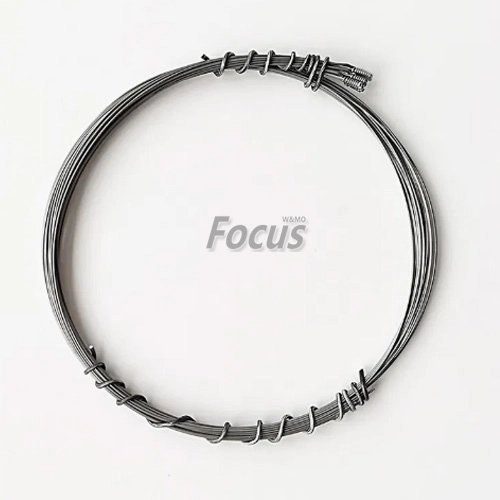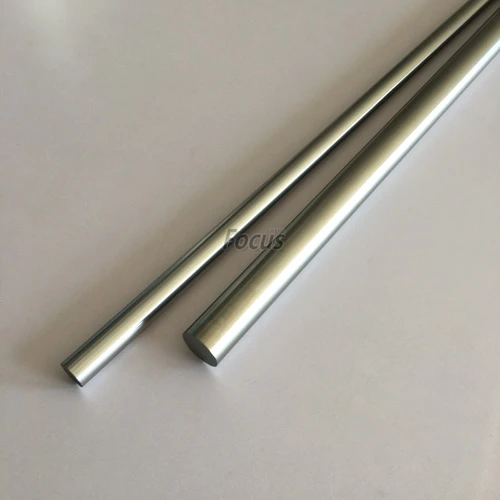
Purity: W>=90%
Density: 16.8-18.8g/cm3
Type: W90NiFe, W92.5NiFe, W95NiFe, W97NiFe
Machinability: better than pure tungsten
WNiFe Alloy — High-Density Tungsten Heavy Alloy | Focuswmo
Focuswmo specializes in manufacturing premium WNiFe tungsten heavy alloys, engineered for applications requiring exceptional density, strength, and reliability. With advanced production technology and strict quality control, our WNiFe alloy delivers outstanding performance in aerospace, military, radiation shielding, precision machining, and high-temperature environments.
1. General & Composition
What is W-Ni-Fe alloy?
W-Ni-Fe is a high-density tungsten-based alloy containing Tungsten (W) as the major matrix (typically 90% to 97%), combined with Nickel (Ni) and Iron (Fe) as binder elements.
Why are Nickel and Iron added to Tungsten?
Pure tungsten has an extremely high melting point (3422℃) and is incredibly brittle, making it exceptionally difficult to machine or shape. Adding Nickel and Iron creates a lower-melting-point liquid phase during sintering. This bonds the tungsten grains together, resulting in a material that retains tungsten's high density while drastically improving its ductility, toughness, and machinability.
What is the typical ratio of Nickel to Iron?
The most common weight ratio of Nickel to Iron is 7:3 or 4:3 (Ni:Fe). Maintaining this balance is critical to prevent the formation of brittle intermetallic phases, ensuring the alloy remains ductile.
2. Key Physical & Mechanical Properties
What is the density of W-Ni-Fe alloy?
Depending on the specific tungsten content, the density typically ranges from 16.8 g/cm3 to 18.8 g/cm3. This is roughly 2.5 times denser than steel and about 1.5 times denser than lead.
Is W-Ni-Fe alloy magnetic?
Yes, weakly. Because it contains iron and nickel, W-Ni-Fe exhibits ferromagnetic properties.
 Note: If an application requires a completely non-magnetic high-density material (such as medical MRI equipment), W-Ni-Cu (Tungsten-Nickel-Copper) is used instead.
How does it compare to lead for radiation shielding?
W-Ni-Fe is vastly superior to lead for radiation shielding. Due to its higher density, it can provide the same level of X-ray and gamma-ray protection as lead while using 30% to 40% less volume. Furthermore, it is non-toxic and structurally stable, unlike lead which is soft and hazardous to health.
3. Manufacturing & Processing
How is W-Ni-Fe alloy manufactured?
Because of the massive melting point gap between tungsten and the binders, it cannot be produced via traditional melting. Instead, it is manufactured using Powder Metallurgy:
1. Blending: High-purity elemental powders (W, Ni, Fe) are precisely mixed.
2. Pressing: The powder is cold-isostatically pressed (CIP) or die-pressed into a "green" compact shape.
3. Liquid-Phase Sintering: The compact is heated in a hydrogen-reducing atmosphere to around 1400℃ - 1500℃. The Ni-Fe matrix melts, wetting the solid tungsten particles and pulling them into a highly dense, pore-free structure.
Can W-Ni-Fe be machined?
Yes. Unlike pure tungsten, sintered W-Ni-Fe can be readily turned, milled, drilled, and tapped using conventional CNC machining practices with carbide tools. It behaves similarly to gray cast iron in terms of machinability.
4.Common Applications
Where is W-Ni-Fe alloy most commonly used?
Thanks to its unique balance of weight, strength, and shielding capabilities, it is widely used in:
Aerospace & Defense: Counterweights for control surfaces, rotor blades, inertial guidance systems, and kinetic energy penetrators.
Medical Technology: Collimators, syringe shields, and radiation therapy shielding components.
Industrial Oil & Gas: Well-logging components and boring bars (where high density and vibration-damping are required).
Sports Gear: High-end dart barrels, golf club weighting, and racing car ballast weights.
5. Comparative Advantage
|
Feature |
W-Ni-Fe Alloy |
Pure Tungsten |
|
Density |
High (16.8 - 18.8 g/cm3) |
Very High (19.3 g/cm3) |
|
Machinability |
Good / Standard CNC |
Extremely Difficult |
|
Toxicity |
Non-toxic |
Non-toxic |
|
Mechanical Strength |
High |
Brittle at room temp |
Why Choose Focuswmo?
• 9+ years of tungsten & molybdenum expertise
• Complete production chain
• Fast delivery & stable quality
• OEM/ODM support
• Competitive pricing

+86 18625974739
focuswmo@outlook.com
High Tech Industrial Zone, Xiyuan International, Jianxi District, Luoyang City, Henan Province
 WeChat
Get a quote