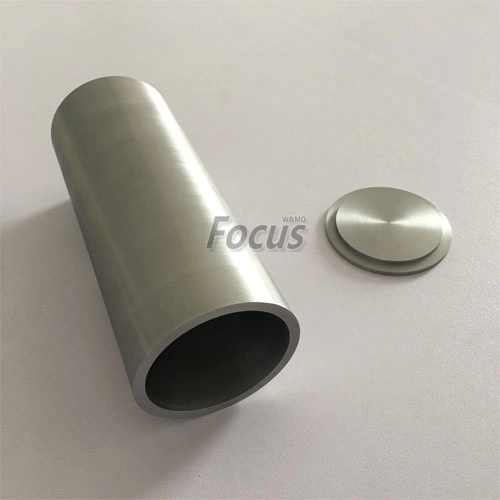
Purity: ≥ 99.95%
Density: ≥ 18.3 g/cm³
Available Types:
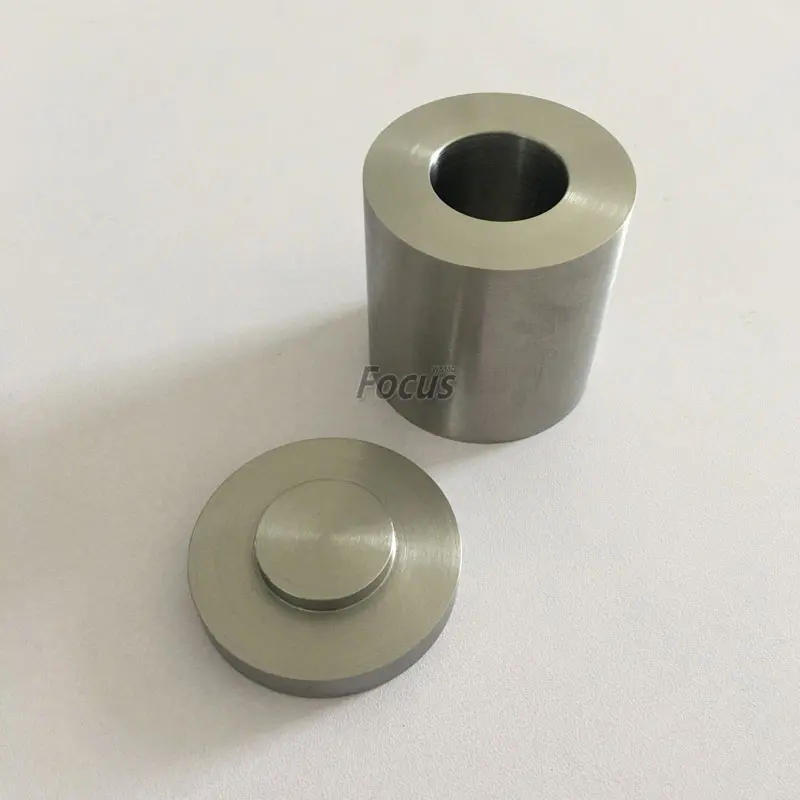
Sintering tungsten crucible
Forged tungsten crucible
Spun forming crucible
Welding / assembled tungsten crucible
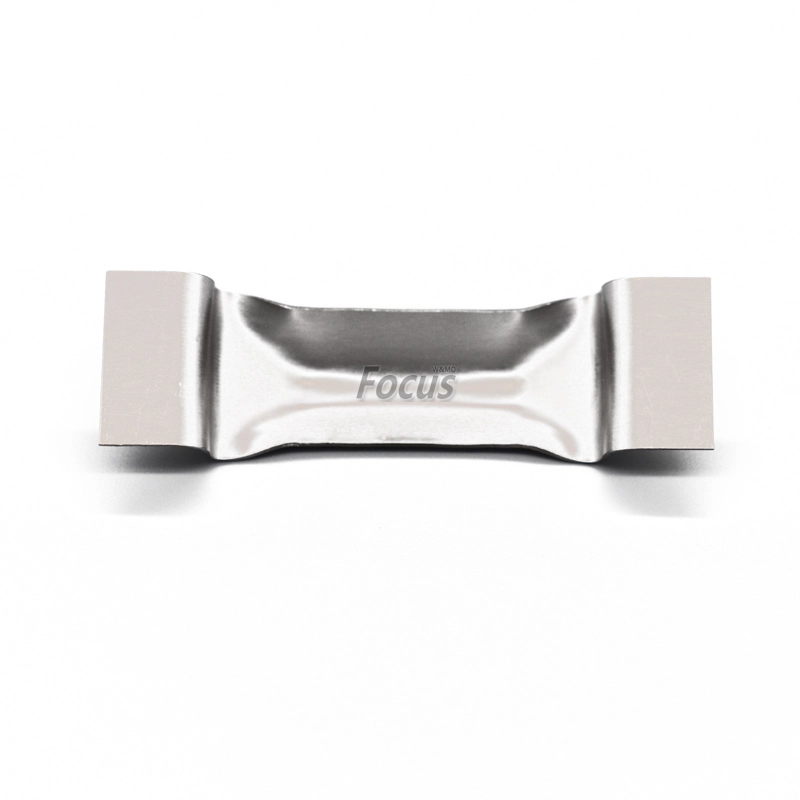
Customized shapes (cylindrical, tapered, conical, boat-type, etc.)
Focuswmo is a leading manufacturer of high-purity tungsten crucibles.Tungsten (W) crucibles are critical high-temperature vessels used in industries requiring extreme heat resistance, exceptional purity, and chemical stability. Manufactured from pure tungsten or tungsten alloys, they are vital components in crystal growth, metallurgy, and high-temperature vacuum processing.
1. General Product Information
What is a tungsten crucible?
A tungsten crucible is a specialized container made from high-purity tungsten metal. Because tungsten has the highest melting point of all metals, these crucibles are used to contain, melt, and process materials at temperatures where other metals or ceramics would instantly melt, deform, or react.
What are the main manufacturing methods for tungsten crucibles?
The fabrication method directly impacts the crucible's density, structural integrity, and cost:
l Sintering (Powder Metallurgy): Tungsten powder is pressed into a mold and heated below its melting point until the particles bond. This produces a cost-effective crucible with a density typically around 18.2–18.5 g/cm³. It is widely used for heavy industrial applications like rare-earth melting.
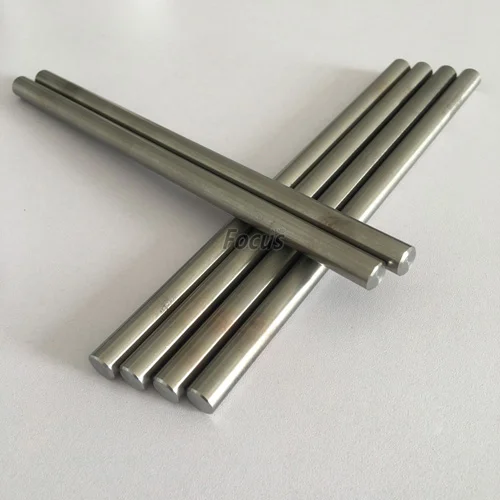
l Machining (Forced/Forged): Turned directly from a solid forged tungsten rod. This results in the highest density (≥ 19.2 g/cm³), excellent mechanical strength, and ultra-smooth surfaces, making it ideal for precision electronics and sapphire growth.
l Spinning/Stamping: Thin tungsten sheets are mechanically spun or stamped over a mandrel. This method is used to create thin-walled crucibles.
l Chemical Vapor Deposition (CVD): Tungsten gas is deposited onto a substrate, yielding high purity and a seamless structure, though it is a more expensive specialty process.
2. Key Properties & Specifications
What are the physical and thermal properties of tungsten crucibles?
Tungsten crucibles owe their performance to the elemental properties of tungsten:
|
Property |
Value / Detail |
|
Melting Point |
3422°C (6192°F) — Highest of all metals |
|
Boiling Point |
5555°C (10031°F) |
|
Maximum Operating Temp |
Up to 2600°C (4712°F) in vacuum or inert atmospheres |
|
Density |
19.3 g/cm³ (theoretical maximum) |
|
Thermal Conductivity |
~174 W/(m·K) at room temp (excellent heat distribution) |
|
Purity Levels |
Commonly ≥ 99.95%; high-purity grades reach ≥ 99.99% |
Are tungsten crucibles resistant to chemical corrosion?
Tungsten is highly resistant to corrosion by many molten metals, including gold, silver, copper, and alkaline metals. It also withstands non-oxidizing acids like hydrofluoric and sulfuric acids at normal temperatures.
|
Critical Operating Warning: Tungsten oxidizes rapidly in air at temperatures above 400°C–500°C, forming volatile tungsten oxides (WO3). Therefore, tungsten crucibles must only be heated at extreme temperatures under a strict vacuum or in a dry inert gas atmosphere (such as Argon or Nitrogen). |
3. Applications & Industries
What is the primary use of tungsten crucibles?
l Sapphire Crystal Growth: This is the single largest consumer application. Forged tungsten crucibles are used in the Kyropoulos (KY) or Czochralski (CZ) methods to melt high-purity alumina (Al2O3) at around 2050°C to grow single-crystal sapphires for LEDs, optical windows, and smartphone screens.
l Rare-Earth Smelting: Sintered tungsten crucibles are used to melt and process high-purity rare-earth metals.
l Quartz Glass Melting: Used as induction heating elements or melting vessels in high-temperature quartz glass manufacturing.
l Vacuum Evaporation/Coating: Used in thermal evaporation systems to melt coating metals (like aluminum or gold) to deposit thin films onto electronic components or glass.
4. Selection, Maintenance, and Handling
How do I choose between a sintered and a machined tungsten crucible?
l Choose Machined (Forged) if your application requires ultra-high purity, no contamination of the melt, smooth walls to prevent crystals from sticking, and a prolonged thermal lifespan (e.g., sapphire crystal growth).
l Choose Sintered if you require massive, heavy-walled vessels for bulk metallurgical melting where minor surface porosity and slightly lower density are acceptable trade-offs for a lower price point.
How do you prolong the lifespan of a tungsten crucible?
Tungsten is intrinsically brittle at room temperature (high ductile-to-brittle transition temperature). To avoid cracking:
l 1. Control Cooling Speeds: Avoid rapid thermal shocking. Program slow, uniform heating and cooling cycles.
l 2. Handle with Care: Never subject a cold tungsten crucible to mechanical shocks or impacts.
l 3. Verify Atmospheres: Ensure the vacuum level is sufficient (<10^-3 Torr) or the inert gas is pure before ramping up temperatures to prevent destructive oxidation.
l 4. Mind Thermal Expansion: When melting materials inside the crucible, account for the difference in thermal expansion between the tungsten and the material inside to avoid stress fractures during solidification.
✔ Over 9 years tungsten & molybdenum manufacturing experience
✔ Factory direct price and fast delivery
✔ Advanced CNC deep processing capability
✔ Strict quality control – Density ≥ 18.3 g/cm³
✔ Global supply to Europe, USA, Korea, Japan, India, etc.
Vacuum-sealed & foam-protected
Exported in wooden boxes
Shipping via DHL / FedEx / Air / Sea

+86 18625974739
focuswmo@outlook.com
High Tech Industrial Zone, Xiyuan International, Jianxi District, Luoyang City, Henan Province
 WeChat
Get a quote